Before it was a postcard, the San Clemente Pier was a promise.
I’ve visited San Clemente often over the years. Long before I ever thought about formally documenting California’s piers, I found myself drawn to this stretch of coast again and again—wandering the neighborhoods near the water, lingering around the pier, and soaking in the particular rhythm that makes this town feel unhurried in the best possible way.
When I finally made a purposeful visit to include San Clemente Pier in my California Pier Series, it was March 2, 2018. At the time, I was living just up the coast in Laguna Beach, California, and the trip felt less like a drive and more like a continuation of a familiar conversation with the shoreline.
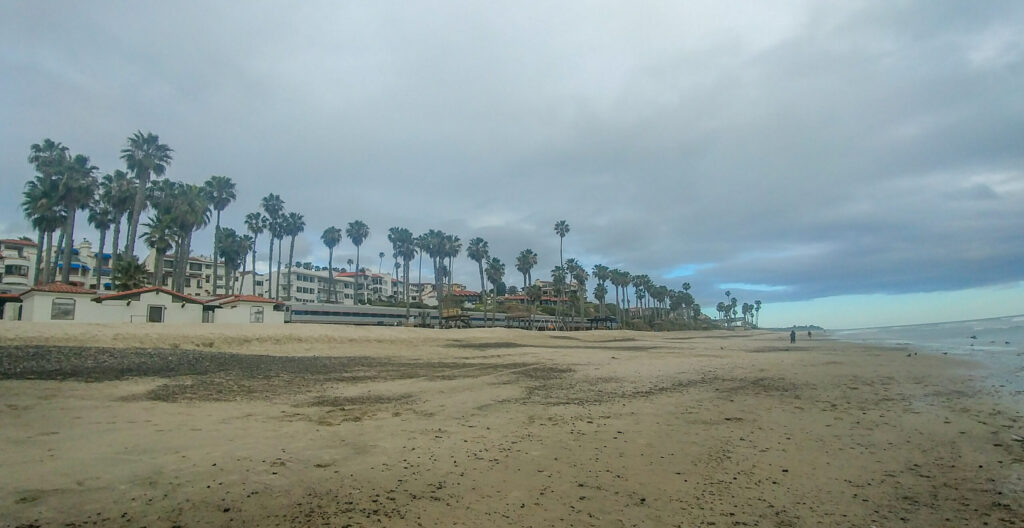
A long, quiet stretch of sand beneath the palms — San Clemente settling into its morning rhythm. 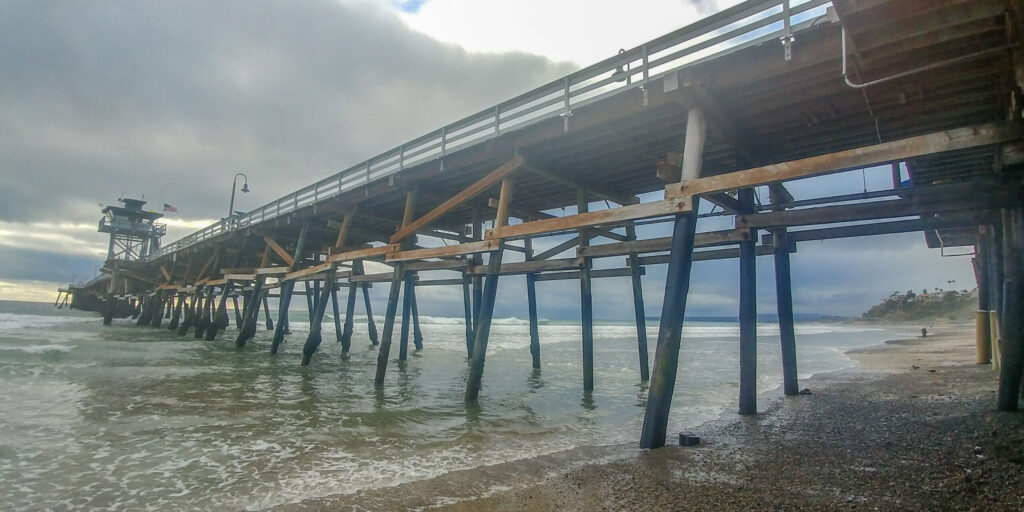
Beneath the pier, where timber, tide, and time quietly meet. 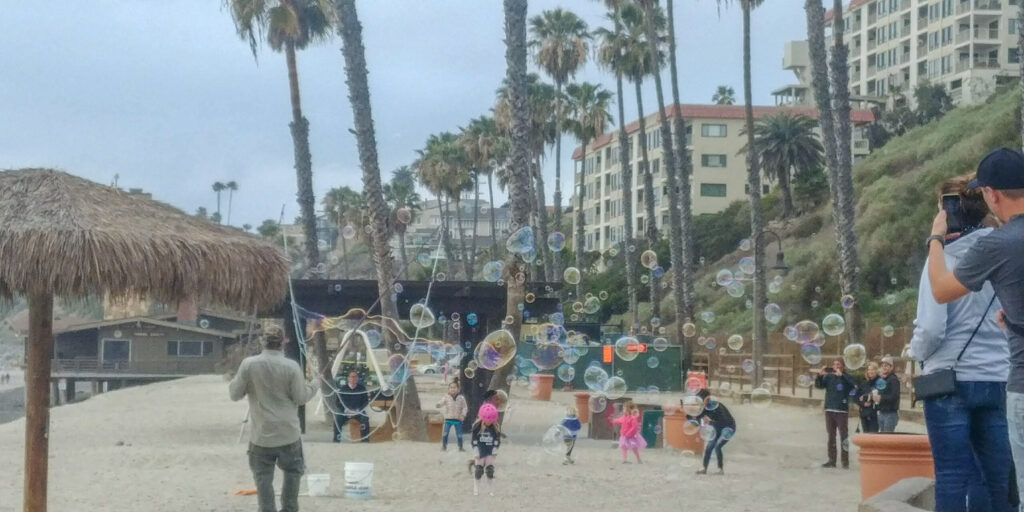
A moment of joy at the pier’s edge — children chasing bubbles while the ocean waits just beyond. 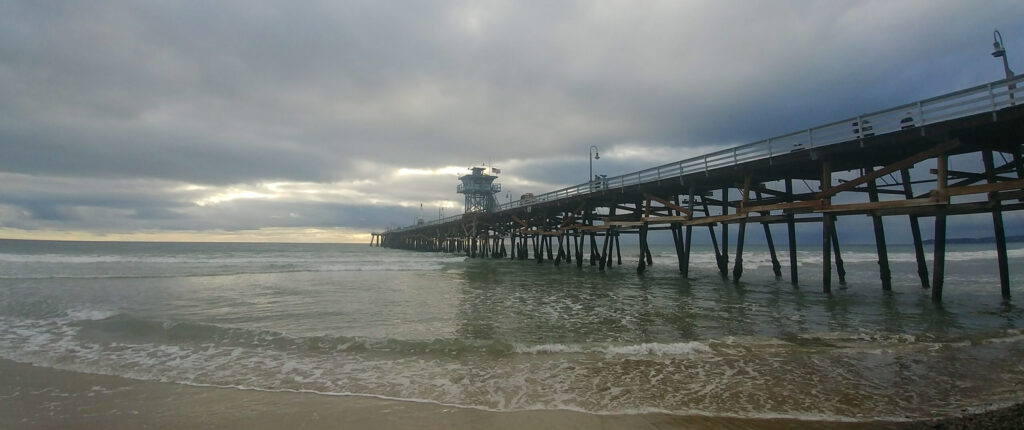
The pier reaching outward, meeting the Pacific where light begins to break through the clouds. 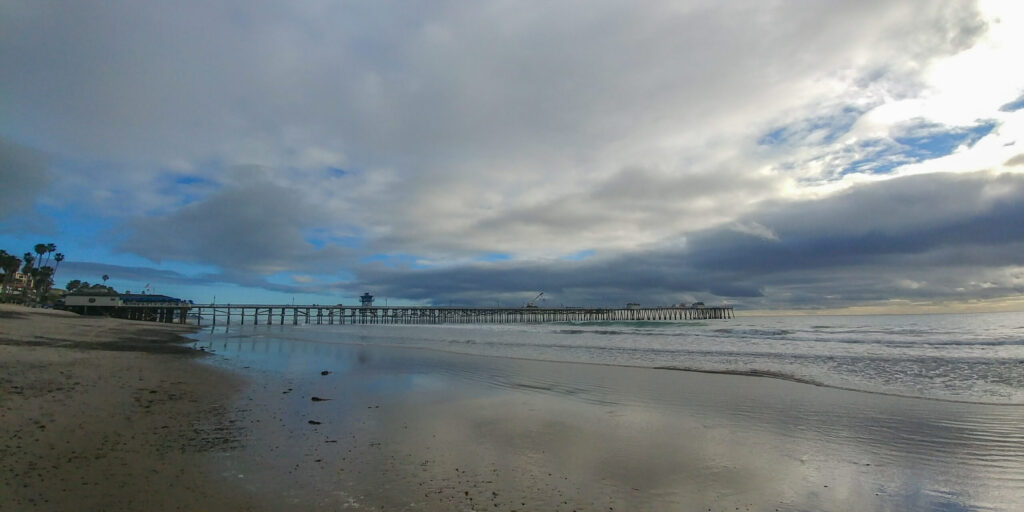
The pier holding steady beneath a shifting sky, San Clemente on a crisp coastal afternoon.
That day was crisp. The kind of coastal cool that sharpens the light and makes every detail feel more present. One of the most memorable scenes wasn’t out over the water—it was right at the entrance to the pier, where a group of kids had gathered, completely absorbed by a street performer who was a masterful bubble artist. He sent enormous, shimmering bubbles floating into the air, catching the light as they drifted toward the ocean.
Who doesn’t love bubbles floating on the wind?
That small moment—joyful, fleeting, communal—felt like a perfect introduction to a pier that has always been about shared space and simple pleasure.
Historical Background
San Clemente Pier’s story begins in the late 1920s, amid Ole Hanson’s ambitious vision to create a “Spanish Village by the Sea.” Hanson, a former Seattle mayor turned real estate developer, founded San Clemente in 1925 with plans for a thoughtfully designed seaside community—one that included Spanish Colonial Revival architecture, a public pool, and a recreational fishing pier.
True to that vision, the original San Clemente Municipal Fishing and Pleasure Pier was built in 1928, constructed by Hanson himself and gifted outright to the community. From the very beginning, the pier was established as a public amenity, not a commercial enterprise. Stretching roughly 1,200 feet into the Pacific, the wooden structure quickly became a defining element of the young town’s identity.
In its early years, the pier served more than just leisurely strollers and anglers. Before a proper harbor existed nearby, small passenger boats would dock alongside the pier, ferrying visitors up and down the coast—an echo of a time when the shoreline itself was the primary thoroughfare.
Despite its idyllic setting, the pier also played a role in a more shadowed chapter of American history. During Prohibition, in the late 1920s and early 1930s, smugglers quietly used the pier under cover of darkness to unload contraband liquor. A hidden hatch beneath the pier’s old snack shack facilitated these clandestine operations—a reminder that even the most peaceful places often carry complex stories beneath the surface.
After the repeal of the 18th Amendment in 1933, the pier returned fully to its intended purpose. Families, fishermen, and visitors once again claimed the space, enjoying seaside strolls and casting lines into the surf just as Hanson had envisioned.
Tested by Nature, Rebuilt by Resolve
Nature, however, had its own plans.
In September 1939, a rare tropical storm—remnants of a Pacific hurricane—slammed into Southern California, devastating much of the pier. Photographs from the time show large sections collapsed into the surf, with debris reportedly washing as far south as Dana Point. Yet the response from the community was swift and determined. By 1940, the pier had been rebuilt on the same footprint, restored to its place as the town’s front porch to the sea.
For more than four decades after, the pier stood largely unscathed. It became a backdrop for everyday life—sunset walks, fishing traditions, and moments so ordinary they quietly shaped generations.
Then came El Niño.
In 1983, forewarned by severe weather reports, city officials took the extraordinary step of cutting an 80-foot section out of the pier in an attempt to save the rest. Even so, massive waves overwhelmed the structure. In March of that year, the seaward end was torn away, sending the bait shop and portions of the deck into the ocean below.
Remarkably, the Fisherman’s Restaurant at the base of the pier survived.
Rebuilding took nearly two years and approximately $1.4 million, culminating in a reopening in 1985. This time, the pier returned stronger—extended slightly to 1,296 feet, reinforced internally, and better equipped to face future storms. When another major storm hit in 1989, the pier withstood the impact with minimal damage, a testament to the resilience built into its reconstruction.
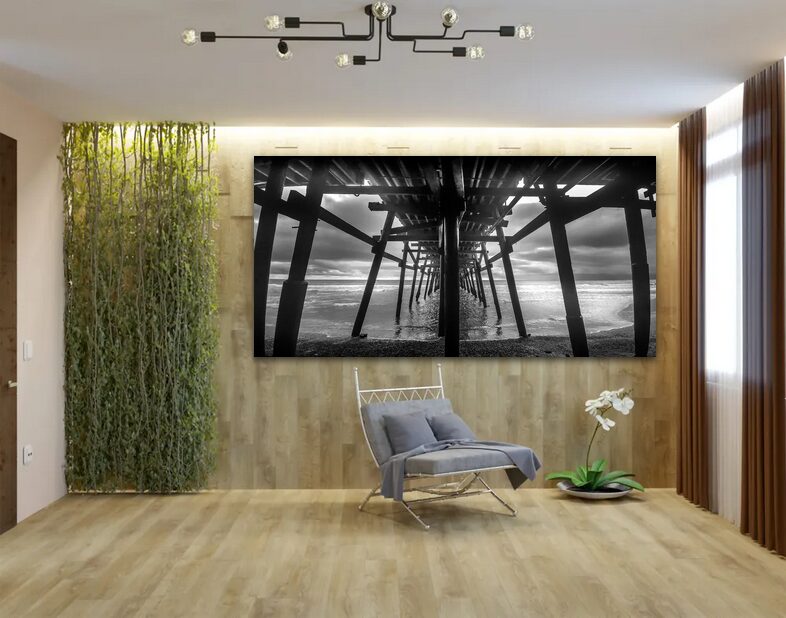
Architectural and Structural Character
San Clemente Pier exemplifies classic Southern California pier architecture—a straightforward, functional design that prioritizes experience over ornamentation. The original 1928 structure relied on timber piles driven deep into the seabed, supporting a simple plank deck that extended confidently into the Pacific.
After the 1939 storm, the 1940 rebuild faithfully replicated the wooden design, preserving the pier’s familiar profile. White-painted railings and light posts added a gentle elegance, balancing utility with charm.
The most significant structural evolution came after the 1983 destruction. While the pier retained its wooden decking and visual identity, the 1985 reconstruction introduced critical internal upgrades: hidden steel reinforcement, concrete footings, and improved materials that dramatically increased its resilience. What appears outwardly unchanged is, in reality, a blend of vintage charm and modern engineering.
Further renovations in 2008, led by the PierPride Foundation, replaced worn timbers and upgraded railings with weather-resistant composite materials designed to mimic the original look while ensuring longevity. Today, the pier’s bones are prepared for the realities of a changing climate, even as its surface remains comfortably familiar.
Community and Cultural Relevance
For nearly a century, San Clemente Pier has functioned as the heart of the community. It is more than wood and steel—it’s a shared stage where local life unfolds.
Ole Hanson envisioned the pier as a communal asset, jointly owned in spirit if not in deed, and that intention still resonates. Families stroll its length at dusk. Parents teach children how to fish. Couples pause beneath the lamps as the sky shifts color.
Its role in daily life has earned it the affectionate nickname: “San Clemente’s front porch.”
Each summer, the pier anchors the San Clemente Ocean Festival, known as “The Greatest Show on Surf.” Dory races, surf contests, sandcastle competitions, and lifeguard events transform the pier and beach into a celebration of coastal culture. The structure becomes both stage and spectator, holding the town together in motion.
Personal milestones abound here—first kisses, marriage proposals, quiet moments of reflection. Surfers gather just south of the pier at T-Street, while onlookers line the railings above, sometimes applauding as surfers thread the pilings below. Artists and photographers are drawn repeatedly to the pier’s geometry, light, and sense of rhythm. It appears again and again in gallery walls and creative work, reinforcing its role as muse as much as landmark.
The Pier Today
Today, San Clemente Pier remains as alive as ever.
Mornings bring fishermen lining the railings, exchanging tips as rods arc into the water. Surfers paddle out beneath the early light. Joggers move along the Pier Trail beneath the structure, while the town slowly wakes.
At the base, the Fisherman’s Restaurant & Bar continues to serve seafood and ocean views from a building that once stored boats and bait. Diners can feel the subtle tremor of waves against the pilings—a sensory reminder of how close they are to the sea.
The pier is uniquely accessible, with a Metrolink/Amtrak station just steps away—one of the few California piers you can arrive at by train. Stepping off onto the platform, the view feels cinematic, like an arrival into a living postcard.
Walking the pier today engages every sense: salt and sunscreen in the air, gulls overhead, the quiet plunk of a freshly caught fish hitting the deck. As evening settles in, couples gather on benches beneath the lamps, watching pastel sunsets stretch across the horizon. Time slows. Conversation softens.
A Living Promise
San Clemente’s motto might as well be “life in the slow lane,” and nowhere embodies that philosophy better than the pier. It remains free and open to all, maintained through a partnership between the city and community organizations like the PierPride Foundation.
In winter, festive string lights glow along the structure. Looking ahead, discussions continue about interpretive art installations that would further honor the pier’s layered history.
In the end, San Clemente Pier stands as both landmark and lifeblood—a graceful essay written in wood, steel, and perseverance. It connects past, present, and future with quiet confidence.
Whether experienced as a place of childhood wonder, creative inspiration, or simple reflection, the pier continues to fulfill Ole Hanson’s promise:
A place where people can live together more pleasantly—where a fishing pier and a beach are enlivened by people finding healthy joy in life.
More from the Shots By Dubbs Blog
Shots By Dubbs is a fine art photography journal exploring place through intention, scale, and permanence. Each post pairs original photographic work with the history and context of where it was made—examining how landscapes, structures, and light become lasting visual narratives.
This is photography created to live on walls, not just screens.
Considered compositions. Limited editions. Work meant to be experienced slowly.
Below are the three most recent entries from the blog.
-
San Clemente Pier – A Vision Built Into the Sea
Before it was a postcard, the San Clemente Pier was a promise. I’ve visited San…
-
Why Only Five Works Are Available at a Time
Visitors often ask why only a small number of works are available here at any…
-
What Makes a Photograph Exhibition-Grade
Not all photographs are meant for exhibition; the distinction lies in intentionality. Exhibition-grade photography emphasizes…